

The Nutrient Absorption Crisis: Hidden Reasons Healthy Diets Fail
Eating a balanced diet is an important part of maintaining good health, but the nutrients in food must also be properly digested and absorbed by the body. Problems affecting the digestive tract, pancreas, liver, or small intestine can interfere with this process. In some cases, a person may develop nutrient deficiencies or other nutritional problems even when their diet appears adequate.
How Nutrient Absorption Works
Digestion breaks food down into smaller components that the body can process and absorb. The small intestine is particularly important because most nutrients from food are absorbed there. These nutrients include proteins, carbohydrates, fats, vitamins, minerals, and other substances needed for normal body functions.
Malabsorption occurs when the body cannot properly digest or absorb one or more nutrients. It can affect specific nutrients or several nutrients at the same time, depending on the underlying cause.
Hidden Causes of Poor Nutrient Absorption
1. Gastrointestinal Diseases
Several conditions affecting the digestive system can interfere with digestion or nutrient absorption. Diseases involving the small intestine, pancreas, liver, or other parts of the gastrointestinal tract may contribute to malabsorption.
Conditions such as celiac disease, Crohn's disease, pancreatic disorders, and short bowel syndrome are among the conditions associated with impaired nutrient absorption.
Chronic digestive symptoms, particularly persistent diarrhea, unexplained weight loss, abdominal discomfort, or signs of nutritional deficiency, should be evaluated by a healthcare professional.
2. Gastrointestinal Infections
Some intestinal infections can temporarily interfere with normal absorption. Infections may affect the intestinal lining or cause prolonged diarrhea, which can contribute to fluid, electrolyte, and nutritional losses.
Persistent diarrhea should not simply be assumed to be a dietary problem. If symptoms continue, medical evaluation can help identify the underlying cause.
3. Food Intolerances
Food intolerances can cause digestive symptoms such as bloating, gas, diarrhea, nausea, or abdominal discomfort. For example, lactose intolerance occurs when the small intestine does not produce enough lactase to properly digest lactose.
Avoiding certain foods may reduce symptoms, but unnecessarily eliminating large food groups can also make it harder to maintain a nutritionally balanced diet. Anyone considering major dietary restrictions should discuss appropriate alternatives with a healthcare professional or registered dietitian.
4. Medications and Other Health Conditions
Certain medications and medical conditions can interfere with digestion, absorption, or nutrient levels. The effect depends on the specific medication or underlying condition. Malabsorption can also result from problems involving digestive enzymes, bile, the intestinal lining, or the structure of the small intestine.
For this reason, unexplained nutritional deficiencies should not automatically be attributed to diet alone.
What Are the Warning Signs of Poor Nutrient Absorption?
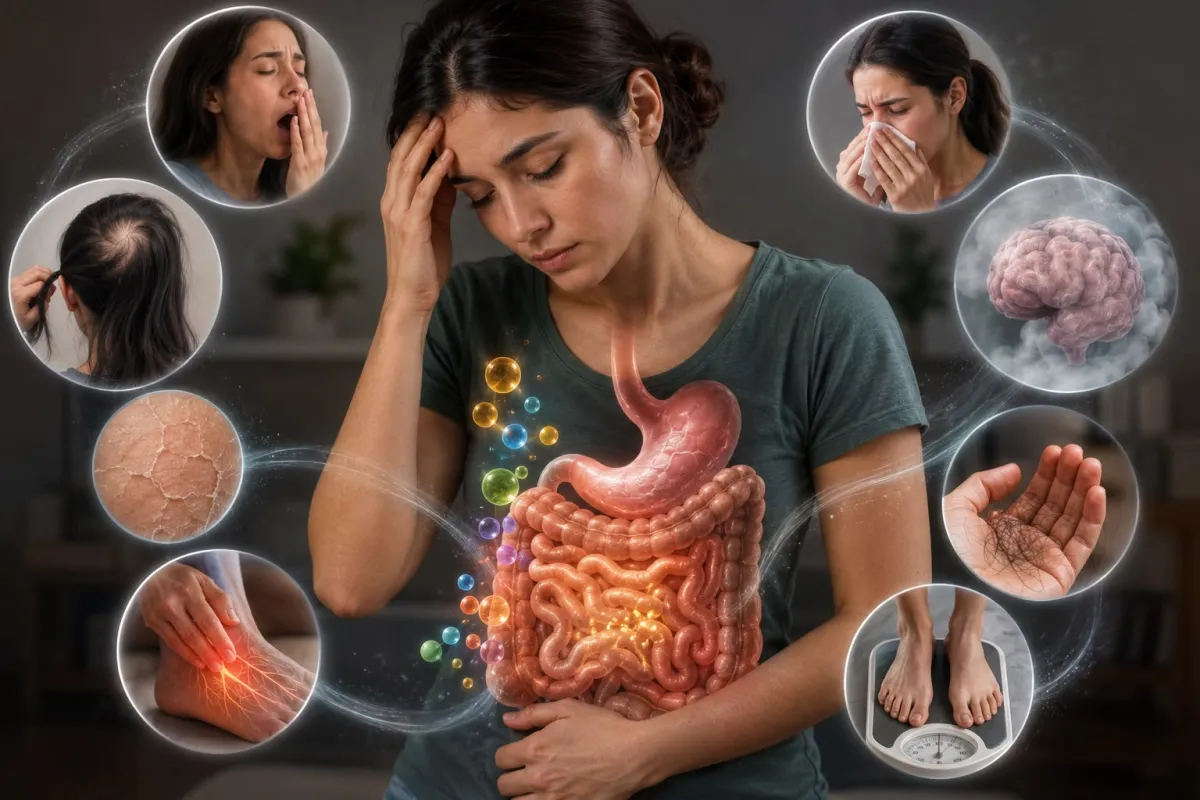
Malabsorption can produce gastrointestinal symptoms as well as symptoms related to nutritional deficiencies.
Possible signs include:
- Persistent or chronic diarrhea
- Loose, greasy, or unusually foul-smelling stools
- Abdominal bloating or excessive gas
- Unintentional weight loss
- Difficulty maintaining weight
- Fatigue or weakness
- Symptoms associated with specific vitamin or mineral deficiencies
Chronic diarrhea is a common symptom of malabsorption, while weight loss can occur when the body is unable to absorb enough nutrients despite adequate food intake.
However, these symptoms are not specific to malabsorption. Fatigue, weakness, digestive symptoms, and weight changes can occur for many different reasons. A healthcare professional should evaluate persistent or unexplained symptoms rather than relying on symptoms alone.
Which Nutrient Deficiencies Can Occur?
The effects of malabsorption depend on which nutrients are affected.
For example, impaired absorption may contribute to deficiencies involving iron, vitamin B12, folate, calcium, vitamin D, or other nutrients. The resulting symptoms vary according to the nutrient involved and the severity of the deficiency.
Some pancreatic disorders can particularly affect the absorption of fat-soluble vitamins such as vitamins A, D, E, and K.
How Can You Support Adequate Nutrient Intake?
A varied and balanced diet remains an important foundation for good nutrition. Depending on individual dietary needs, nutritious foods may include vegetables, fruits, legumes, whole grains, eggs, dairy products or suitable alternatives, fish, meat, nuts, and seeds.
For people in Pakistan, commonly available nutritious foods such as leafy green vegetables, seasonal fruits, daal, chickpeas, beans, wheat-based whole grains, eggs, milk, fish, meat, nuts, and seeds can contribute to a varied diet.
However, changing the diet alone may not correct malabsorption caused by an underlying medical condition. Treatment depends on the specific cause.
When Should You See a Doctor?
Consider speaking with a healthcare professional if you have persistent diarrhea, unexplained weight loss, ongoing digestive problems, repeated signs of nutritional deficiency, or difficulty maintaining your weight.
Evaluation may involve a medical history and physical examination followed by appropriate blood or stool tests. Depending on the suspected cause, additional testing or referral to a gastroenterologist may be recommended.
The appropriate investigation depends on the person's symptoms and medical history, so there is no single test that is suitable for everyone.
The Takeaway
Eating a healthy diet is important, but nutrition also depends on the body's ability to digest and absorb nutrients. Digestive diseases, intestinal infections, food intolerances, pancreatic problems, and other conditions can interfere with this process.
Persistent diarrhea, unexplained weight loss, greasy stools, fatigue, or suspected nutrient deficiencies should not automatically be blamed on an unhealthy diet. If these symptoms continue, professional medical evaluation can help identify the underlying cause and guide appropriate treatment.


Leave a Comment