
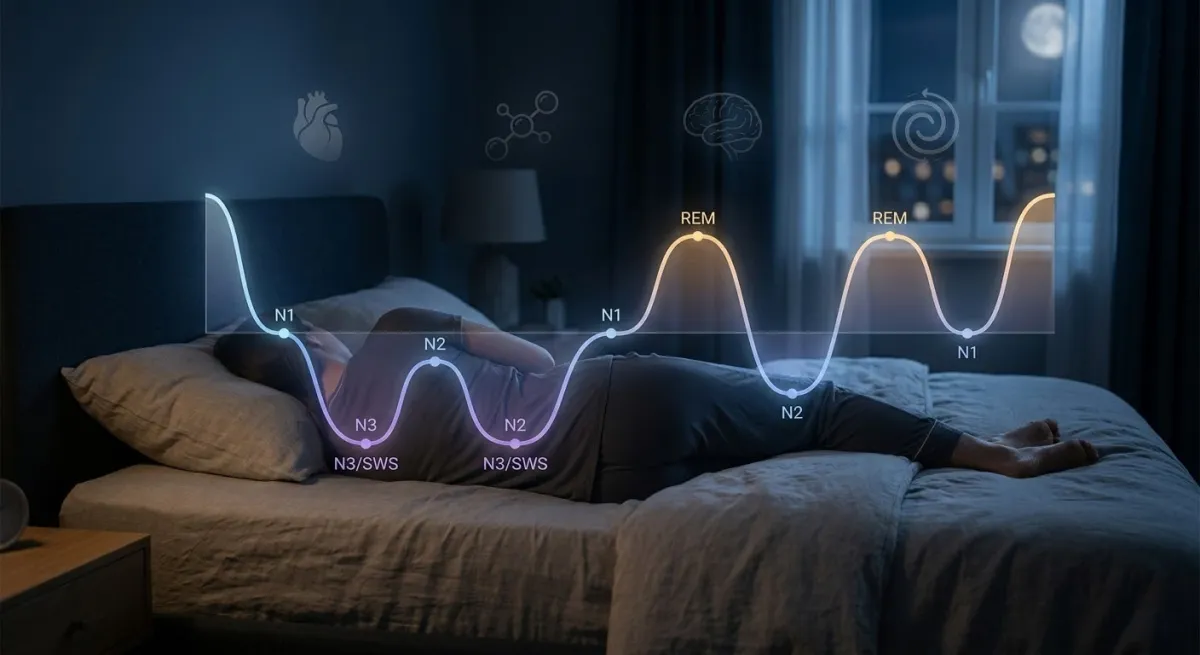
Sleep Architecture: How Sleep Affects Long-Term Health
Sleep is much more than simply spending a certain number of hours in bed. During a normal night, the brain and body move through different sleep stages, including non-rapid eye movement (NREM) sleep and rapid eye movement (REM) sleep. Together, these stages form what is known as sleep architecture.
Healthy sleep architecture, adequate sleep duration, and good sleep quality are important parts of overall health. Research has linked insufficient or disrupted sleep with several health problems, including cardiovascular disease, high blood pressure, obesity, diabetes, problems with concentration and memory, and other chronic health conditions.
This article explains what sleep architecture means, how sleep stages work, how poor sleep may affect long-term health, and how to develop healthier sleep habits.
What Is Sleep Architecture?
Sleep architecture refers to the pattern and organization of sleep stages throughout the night.
Sleep is generally divided into two major categories:
- NREM sleep
- REM sleep
NREM sleep includes several stages, progressing from lighter sleep toward deeper sleep. REM sleep is a different stage associated with vivid dreaming and important brain processes related to learning and memory.
These sleep stages occur repeatedly throughout the night rather than appearing only once. The amount and timing of each sleep stage can vary with age and other factors.
Understanding sleep stages and sleep cycles is important because good sleep is not only about the number of hours you spend in bed. Sleep quality, continuity, timing, and regularity also matter.
Why Is Sleep Architecture Important?
During sleep, the body performs important physical and mental functions.
Adequate, good-quality sleep supports:
- Brain function
- Learning and memory
- Attention and concentration
- Emotional regulation
- Physical recovery
- Heart and blood-vessel health
- Immune function
- Metabolic health
When sleep is repeatedly shortened, fragmented, or disrupted, these processes can be affected.
The National Heart, Lung, and Blood Institute notes that ongoing sleep deficiency is associated with health problems including heart disease, high blood pressure, obesity, diabetes, and stroke.
Sleep Architecture and Long-Term Health
Poor sleep does not mean that a person will definitely develop a particular disease. However, research has found associations between inadequate or disrupted sleep and several chronic health conditions.
Here are some of the major areas affected by sleep health.
1. Sleep and Heart Health
Sleep and heart health are closely connected.
Repeatedly getting too little sleep or experiencing poor-quality, fragmented sleep may contribute to cardiovascular risk factors such as elevated blood pressure.
Long-term sleep deficiency has been associated with heart disease, high blood pressure, and stroke.
Sleep disorders can also affect cardiovascular health. For example, obstructive sleep apnea causes repeated interruptions in breathing during sleep and has been associated with cardiovascular problems, including high blood pressure and stroke.
If you regularly snore loudly, wake up gasping or choking, experience breathing interruptions during sleep, or remain excessively sleepy during the day, discuss these symptoms with a healthcare professional.
2. Poor Sleep, Weight Gain, and Obesity
Poor sleep and obesity are also connected.
Sleep affects several biological processes involved in metabolism and appetite. Inadequate sleep has been associated with increased risk of excess body weight and obesity.
Sleep alone does not determine body weight. Diet, physical activity, genetics, medications, medical conditions, and many other factors also influence weight.
However, consistently getting enough quality sleep is an important part of a healthy lifestyle.
For more information about lifestyle factors that may influence long-term health, read our article:
Everyday Habits That Quietly Increase Your Risk of Developing Serious Diseases
3. Sleep and Blood Sugar
Sleep also plays a role in glucose metabolism and blood sugar regulation.
Research has found associations between inadequate or irregular sleep and changes in glucose metabolism and insulin sensitivity. Sleep problems are also associated with an increased risk of type 2 diabetes.
This does not mean that poor sleep alone causes diabetes. Type 2 diabetes develops through a combination of genetic, metabolic, lifestyle, and other factors.
Nevertheless, maintaining healthy sleep habits can be one part of an overall approach to metabolic health.
Our article Silent Diseases That May Show Few or No Symptoms also discusses conditions such as high blood pressure, type 2 diabetes, chronic kidney disease, fatty liver disease, and high cholesterol.
4. Sleep and Brain Health
Sleep is important for learning, memory, attention, and cognitive performance.
Not getting enough quality sleep can make it harder to concentrate, learn new information, think clearly, and react quickly.
Poor sleep can also contribute to daytime sleepiness and mood changes.
Because sleep is involved in memory and brain function, maintaining regular and adequate sleep is an important part of supporting long-term brain health.
5. Sleep and Emotional Well-Being
Sleep and emotional health are closely related.
Ongoing sleep problems can affect mood and may be associated with depression, anxiety, and emotional distress.
Stress can also make it harder to sleep, creating a cycle in which stress affects sleep and poor sleep makes it harder to manage daily stress.
For this reason, improving sleep habits can be one useful part of a broader approach to physical and emotional well-being.
6. Sleep and Immune Function
Sleep also supports normal immune function.
Sleep deficiency can affect the body's ability to function properly and may make it harder to fight common infections.
This does not mean that sleeping more will prevent every infection. However, consistently getting enough quality sleep is an important part of maintaining overall health.
What Causes Poor Sleep?
Many factors can contribute to poor sleep quality, sleep deprivation, or disrupted sleep patterns.
Common factors include:
- Irregular sleep schedules
- Chronic stress
- Excessive screen use before bedtime
- Caffeine or other stimulants late in the day
- Alcohol use
- Chronic pain
- Certain medications
- An uncomfortable sleep environment
- Shift work
- Jet lag
- Insomnia
- Sleep apnea and other sleep disorders
Some people may also spend enough time in bed but still wake up feeling exhausted because their sleep is repeatedly interrupted.
How Much Sleep Do Adults Need?
For most adults, health organizations recommend 7 to 9 hours of sleep per night. The exact amount needed varies by person and age.
Getting enough sleep is important, but sleep quality and regularity also matter.
A person who spends eight hours in bed but wakes repeatedly throughout the night may not experience the same quality of sleep as someone whose sleep is relatively continuous.
How to Improve Sleep Quality
Healthy sleep habits can help create a more consistent sleep routine.
Try the following:
- Go to bed and wake up at approximately the same time each day.
- Give yourself enough time to sleep.
- Keep your bedroom comfortable, quiet, and dark.
- Reduce bright screens close to bedtime.
- Avoid caffeine late in the day if it interferes with sleep.
- Avoid heavy meals immediately before bedtime if they disturb your sleep.
- Stay physically active during the day.
- Use relaxing activities as part of your bedtime routine.
- Avoid relying on alcohol as a sleep aid.
- Talk to a healthcare professional if sleep problems continue.
The goal is not to create a perfect sleep routine overnight. Consistency is more important than making your bedtime routine unnecessarily complicated.
Signs You May Have a Sleep Problem
You may want to discuss your sleep with a healthcare professional if you regularly experience:
- Difficulty falling asleep
- Frequent nighttime awakenings
- Very early morning awakening
- Excessive daytime sleepiness
- Loud or persistent snoring
- Gasping or choking during sleep
- Observed pauses in breathing
- Morning headaches
- Difficulty concentrating during the day
- Persistent sleep deprivation despite having enough time in bed
These symptoms do not automatically mean that you have a sleep disorder, but persistent symptoms may deserve medical evaluation.
For more information about other symptoms that should not be ignored, read our article:
10 Health Warning Signs You Should Not Ignore
When Should You Talk to a Doctor?
Occasional poor sleep is common. However, persistent sleep problems should not simply be ignored.
Consider speaking with a healthcare professional if:
- You regularly struggle to sleep.
- You remain extremely tired despite getting enough time in bed.
- You frequently wake up during the night.
- You snore loudly or have breathing interruptions.
- You wake up gasping or choking.
- Daytime sleepiness interferes with work, studies, driving, or daily activities.
- Sleep problems continue for a long period.
A healthcare professional can evaluate your symptoms and determine whether further assessment, such as a sleep study, may be appropriate.
Frequently Asked Questions About Sleep Architecture
What is sleep architecture?
Sleep architecture is the organization and pattern of different sleep stages throughout the night. It includes NREM and REM sleep and the repeated cycles between these stages.
What are the main stages of sleep?
Sleep is broadly divided into NREM sleep and REM sleep. NREM includes lighter and deeper stages of sleep, while REM is a distinct sleep stage associated with dreaming and important brain functions.
Why is sleep quality important?
Sleep quality matters because the body and brain perform important functions during sleep. Poor-quality or repeatedly interrupted sleep can affect daytime alertness, concentration, mood, and long-term health.
How does lack of sleep affect health?
Sleep deprivation is associated with several health problems, including increased risk of high blood pressure, cardiovascular disease, obesity, diabetes, stroke, and impaired daytime performance.
How many hours of sleep do adults need?
Most adults should aim for approximately 7 to 9 hours of sleep per night, although individual needs can vary.
Can poor sleep increase diabetes risk?
Research has found an association between inadequate or disrupted sleep and changes in glucose metabolism and an increased risk of type 2 diabetes. However, diabetes has multiple risk factors and cannot be attributed to sleep alone.
Can poor sleep affect heart health?
Yes. Insufficient or poor-quality sleep is associated with cardiovascular risk factors and conditions including high blood pressure, heart disease, and stroke.
What is sleep apnea?
Sleep apnea is a sleep disorder in which breathing repeatedly stops or becomes reduced during sleep. Obstructive sleep apnea can cause disrupted sleep and reduced oxygen levels and is associated with cardiovascular health risks.
Is sleeping longer always better?
Not necessarily. Healthy sleep involves an appropriate amount of sleep, good quality, regular timing, and adequate continuity. Adults generally need around 7–9 hours, but individual sleep needs vary.
Final Thoughts
Sleep architecture is an important part of healthy sleep. Sleep is not simply a period when the body stops working. During the night, the brain and body move through repeated sleep stages that support important physical and mental functions.
Research has associated insufficient or disrupted sleep with increased risks involving heart health, blood pressure, obesity, blood sugar regulation, diabetes, brain function, mood, and other aspects of health.
Good sleep habits cannot guarantee that a person will avoid chronic disease, but getting adequate and consistent sleep is an important part of a healthy lifestyle.
If you regularly experience insomnia, excessive daytime sleepiness, loud snoring, breathing interruptions, or other persistent sleep problems, speak with a qualified healthcare professional.



Leave a Comment